Have you ever used AI simply as an assistant?
You write the code. You hit an error. You copy and paste the error message into ChatGPT. It gives you a solution. You go back, make the change, and continue coding.
Was that you?
It was certainly me.
For years, I was confident in my abilities as a software engineer. I knew the technologies. I knew how to troubleshoot problems. I knew how to write clean, maintainable code and follow best practices. I took pride in keeping everything organized and well-designed.
I viewed my coding skills as the result of years of hard-earned experience—a valuable asset that could not easily be replaced.
Then AI arrived.
The era of purely human-driven software development, with AI acting only as a simple assistant, is unlikely to return.
A familiar technology shift
A series of breakthroughs transformed the technology landscape:
- 2012: Deep learning achieved breakthrough results in image recognition.
- 2017: The paper Attention Is All You Need introduced the Transformer architecture.
- 2018–2020: Large language models such as BERT and GPT-3 demonstrated unprecedented language capabilities.
- 2022: ChatGPT brought generative AI to mainstream users.
From that point forward, AI was no longer confined to research laboratories. Software engineers, data scientists, and researchers around the world began learning how to build, customize, and apply AI systems. The field was advancing at an extraordinary pace, and many believed AI would become a foundational technology across every industry.
I was one of them.
Those of us with decades of experience have seen technology shifts before. At least I have.
The rise of AI feels remarkably similar to the arrival of the Internet in the late 1990s. Once the Internet entered everyday life, the world changed permanently. Entire industries were transformed. New business models emerged. Communication became instant and global.
The people who recognized the trend early gained an enormous advantage.
Technology shifts of this magnitude rarely move backward.
How my workflow changed
My own journey with AI started cautiously. At first, I would ask AI to generate a small function. Then I asked it to write unit tests. Later, I let it handle larger portions of my projects.
Today, my workflow looks completely different.
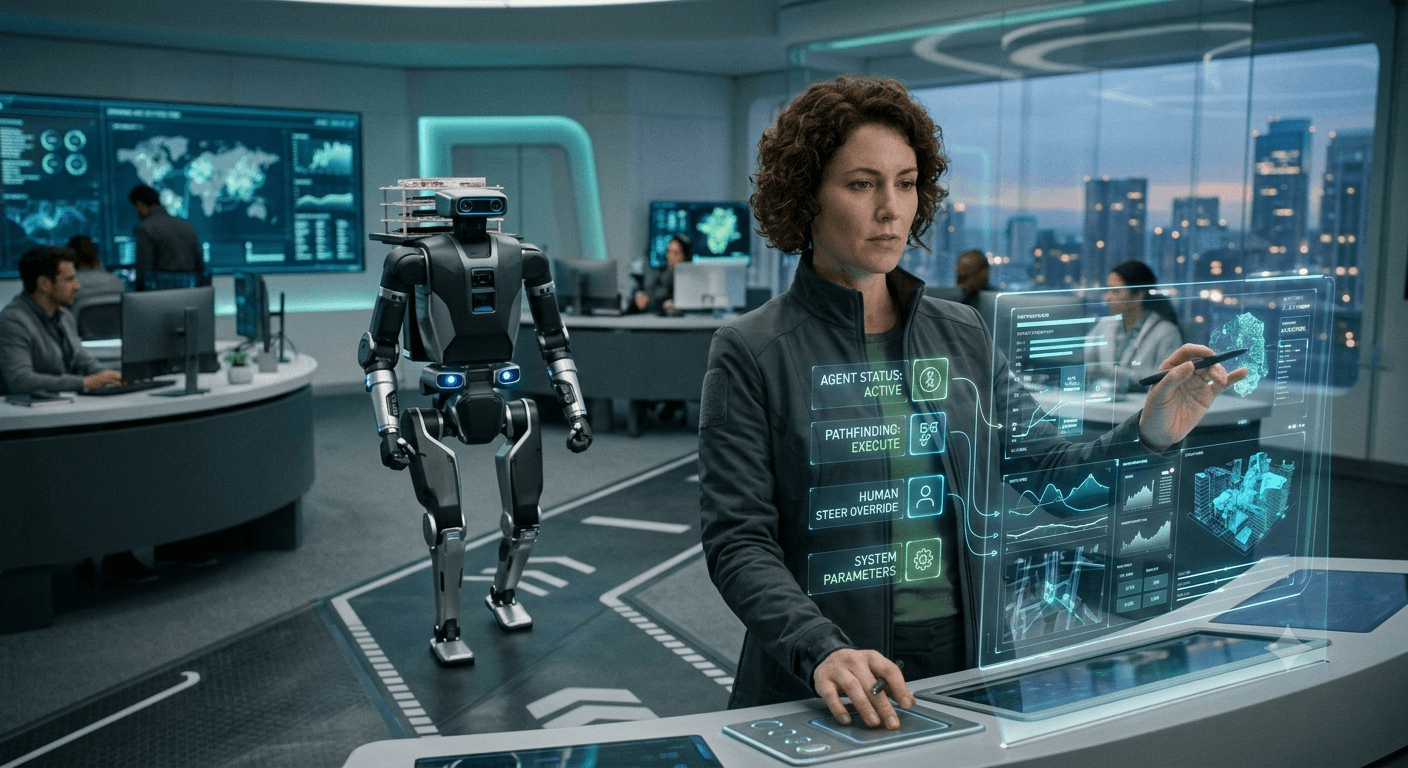
I often ask AI agents in VS Code or Cursor to generate features, write tests, refactor code, review implementations, and even suggest architectural improvements. My role has gradually shifted from being the person who writes every line of code to being the reviewer, architect, and navigator.
The keyboard is no longer my primary tool.
Decision-making is.
Many well-known leaders have made a similar observation: AI itself will not simply take people's jobs. Instead, people who know how to effectively leverage AI will outperform those who do not.
The advantage belongs to those who can combine human judgment with AI-powered productivity.
Building jcus.link with agents
In 2025, I began using AI agents extensively. I asked questions, explored solutions, and used AI to accelerate development. With that approach, I built the first version of my website, jcus.link.
At first, using AI meant repeatedly refining prompts, rewriting instructions, and experimenting with different approaches. Perhaps I was too old to become obsessed with prompt engineering, but I quickly realized something important:
The world is changing every day.
Those who adapt slowly will eventually be overtaken by those who embrace change.
That said, it is never too late to start learning.
The most successful people in the AI era will not necessarily be the strongest programmers. They will be the people who know how to maximize AI's capabilities while making sound decisions.
AI can:
- generate code
- analyze data
- automate workflows
But AI still cannot replace good judgment.
The world continues to need people who can define goals, evaluate trade-offs, identify risks, and choose the right direction.
Learning vs. outsourcing
As I worked alongside AI, I discovered that the journey itself was incredibly valuable. AI pushed me to explore new tools, new frameworks, and new ways of thinking. Rather than replacing my learning, it accelerated it.
One opinion I often hear is, "Just build first and learn later."
I understand the idea, but I don't completely agree.
If you rely entirely on AI-generated solutions without developing a foundation of knowledge and experience, you may head in the wrong direction without realizing it. AI can provide information, but information is not the same as wisdom.
Experience is still what helps us recognize mistakes, evaluate alternatives, and make sound decisions when the answer is not obvious.
The market increasingly rewards engineers who know how to work effectively with AI.
Jensen Huang has repeatedly emphasized the importance of AI literacy and AI-driven productivity. Companies want people who can leverage AI to produce better outcomes faster. They are far less interested in rewarding inefficient processes simply because they are familiar.
Consider a professional who spends countless hours perfecting spreadsheets manually when AI tools can automate much of the work. The issue is not effort. The issue is effectiveness.
As AI continues to improve, the demand for repetitive manual work will continue to decline.
Closing
Looking back, building the first version of jcus.link with AI assistance remains one of the most rewarding learning experiences of my career.
My advice is simple:
- Explore the things that genuinely spark your curiosity.
- Experiment with new technologies.
- Keep learning.
- Stay adaptable.
Years from now, you may discover that your willingness to explore, adapt, and learn was one of the most valuable investments you ever made.